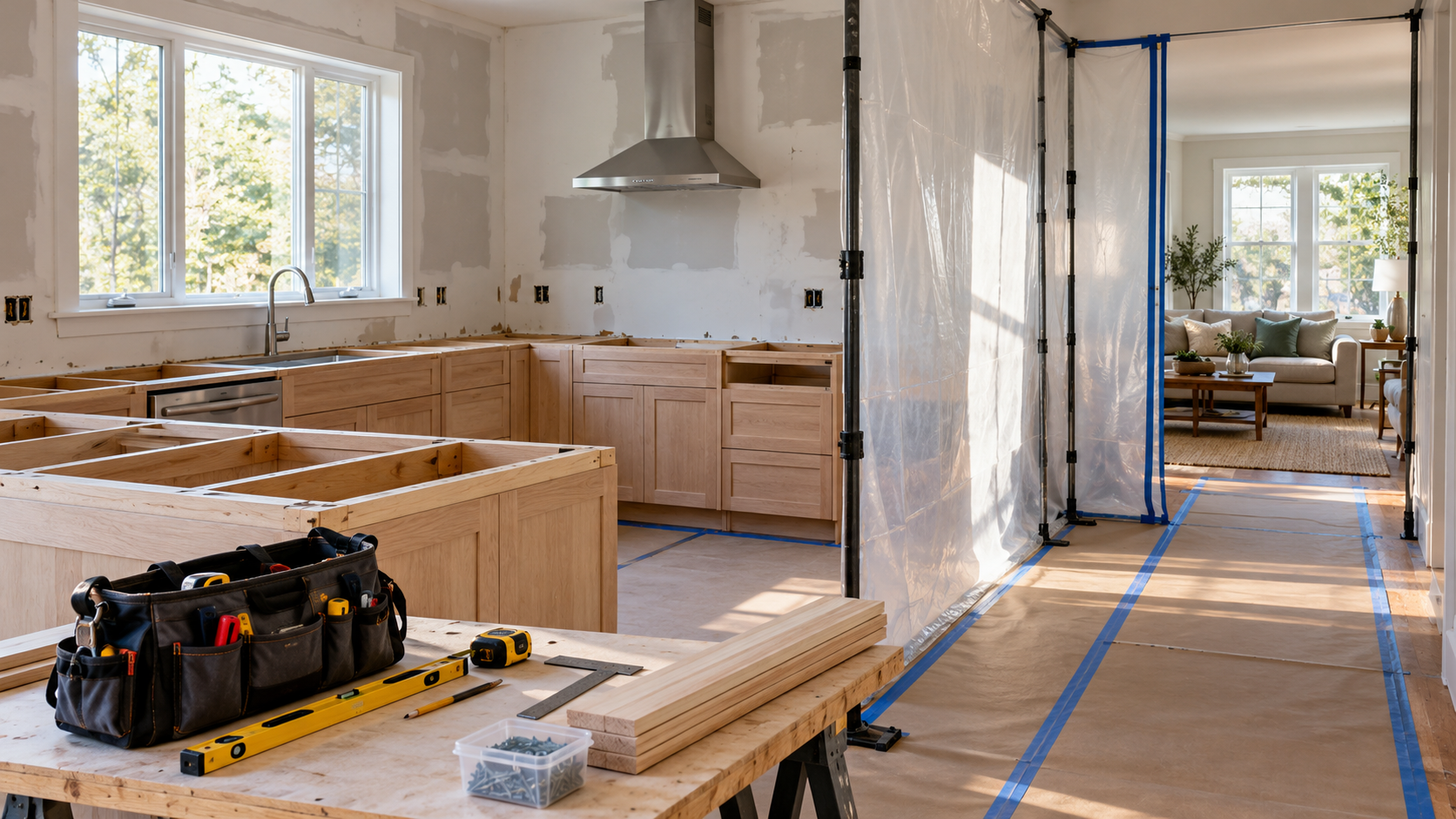
Can you stay home during a kitchen remodel?
Staying home during a kitchen remodel may be workable, but the decision depends on more than the construction schedule. You need reliable access to a bathroom, a place to prepare simple meals, and a route through the house that stays separate from active work. Utility interruptions, dust, noise, and household needs can make some phases harder to live through than others.
The useful question for a general contractor is: “What will this home be like to live in during each phase?” Ask for an occupancy plan alongside the construction proposal. That plan should explain when the kitchen becomes unavailable, how workers will move through the property, and what conditions could require you to stay elsewhere temporarily.
Define what must remain usable
Before requesting bids, list the household functions you cannot easily interrupt. Include refrigeration, drinking water, laundry access, remote work, pet care, and any mobility needs. Identify which rooms workers must cross to reach the kitchen or electrical panel.
Give prospective contractors a simple floor plan showing the kitchen, entrances, bathrooms, and possible temporary meal area. Photos can help explain narrow passages or shared access, but an on-site visit is important before the contractor commits to a protection and access plan.
Separate your priorities into essential needs and preferences. Keeping a bathroom accessible may be essential. Keeping the dining room quiet throughout the day may be a preference that requires a different work sequence or temporary relocation.
Ask the contractor to identify conflicts early. A proposed dust barrier, for example, should not block the household’s necessary exit route.
Establish the temporary kitchen before demolition
Choose a temporary meal area outside the construction zone. It needs a cleanable surface, practical food storage, and convenient access to water. Consider how you will wash dishes without carrying dirty cookware through active work.
A basic setup might include a refrigerator, microwave, and small preparation table. Discuss appliance placement and electrical capacity with the contractor. Do not assume that several countertop appliances can safely share an outlet or extension cord. Keep cooking equipment away from packing materials and follow appliance instructions.
Decide what happens to the existing refrigerator before demolition day. Moving it into another room may affect doors, floors, ventilation clearance, and access to a suitable outlet. If it remains connected to a water line, include that connection in the discussion.
Prepare the area before crews arrive. Empty cabinets, remove food, protect belongings outside the work zone, and decide where reusable appliances will be stored. These owner tasks should have clear deadlines in the schedule.
Use readiness checkpoints before removing the kitchen
A proposed start date is less useful than a clear definition of readiness. Ask which decisions, approvals, materials, and trade arrangements must be complete before demolition begins.
Review these items together:
- Cabinet selections, dimensions, and the installation plan.
- Appliance models and their installation requirements.
- Sink, faucet, and other fixtures that affect rough-in locations.
- Permit and inspection arrangements, where applicable.
- Material delivery dates and a secure storage location.
- The temporary kitchen, access route, and protection setup.
Not every item must be on site before work starts. Some products are ordered or measured later in the sequence. The contractor should explain which missing items could stop progress and which can arrive without extending the kitchen outage.
For example, ask when countertop measurements can occur and what must be installed first. This helps distinguish a necessary waiting period from a delay caused by an unfinished selection.
Map the work into household-facing phases
Request a schedule that explains both the construction activity and its effect on daily life. Broad milestones are often more useful than a calendar that suggests every task is certain to happen on an exact day.
Protection and demolition
The contractor establishes the work boundary, protects agreed surfaces, disconnects affected systems, and removes existing materials. Confirm the debris route, pickup arrangements, and whether exterior doors will remain open during hauling.
Ask how unexpected materials or conditions will be handled. If something requires assessment before disturbance continues, the plan should identify who coordinates that assessment and how the household receives updates.
Rough work and inspections
Plumbing, electrical, framing, or ventilation changes may occur while walls are open. Ask which services will be interrupted, how much notice you will receive, and whether service can be restored at the end of each workday.
Confirm applicable permit and inspection requirements with the city’s building department. Ask the contractor who requests inspections and which work must remain exposed until inspection is complete.
Surfaces, cabinets, and countertops
This phase may involve several dependent visits. Flooring, cabinets, measurements, fabrication, and finish work need a coordinated sequence. Ask what work can continue during any waiting periods and whether stored materials will occupy rooms you expected to use.
Connections and completion
An installed cabinet or countertop does not mean the kitchen is ready for normal use. Appliances, plumbing fixtures, electrical devices, and ventilation may still need connection, testing, or inspection.
Have the contractor identify when each essential function becomes available again, including the sink, refrigerator, and cooking equipment.
Agree on dust, access, and daily shutdown
“Dust protection included” leaves too much open to interpretation. Ask the proposal to describe the work-zone barriers, floor protection, debris handling, and daily cleaning responsibilities. Discuss how heating or cooling equipment near the work area will be managed.
Household members should have a defined route that avoids active construction. Children and pets need a separate plan when doors are open or materials are being moved. Discuss worker access, keys or entry codes, and who secures the property at the end of the day.
Request a daily shutdown routine. It should address tools, sharp debris, open work areas, and the condition of any route the household must use overnight. Ask how barriers will be checked as work progresses.
Also distinguish daily cleanup from final cleaning. Removing construction debris does not necessarily include cleaning every adjacent room, cabinet interior, or appliance surface.
Put schedule changes into a written process
Concealed conditions, delivery problems, or owner changes can alter the sequence. Establish how the contractor will explain a change before you must make a decision.
A written change proposal should describe the added or revised work, its cost, and its effect on the schedule. For an occupied home, it should also explain any additional days without water, cooking facilities, or access through a particular area.
Set a regular update time and choose one primary contact on each side. A short weekly review can cover completed work, upcoming interruptions, decisions needed, and delivery concerns. Urgent service interruptions need a separate notification method.
Compare contractors on the plan for living through the work
When reviewing proposals, compare the same assumptions: kitchen outage, temporary setup responsibilities, protection measures, storage space, cleanup, and coordination of trades. A lower total may reflect fewer included services or more work assigned to you.
Use the California CSLB consumer resources to check credentials and confirm current hiring guidance. You can also browse the LA Services directory to find businesses to contact and compare.
Before work begins, ask for a written recap of your living arrangements, the phase milestones, and the conditions that would prompt temporary relocation. A useful plan makes daily expectations clear while leaving room to respond when the construction sequence changes.