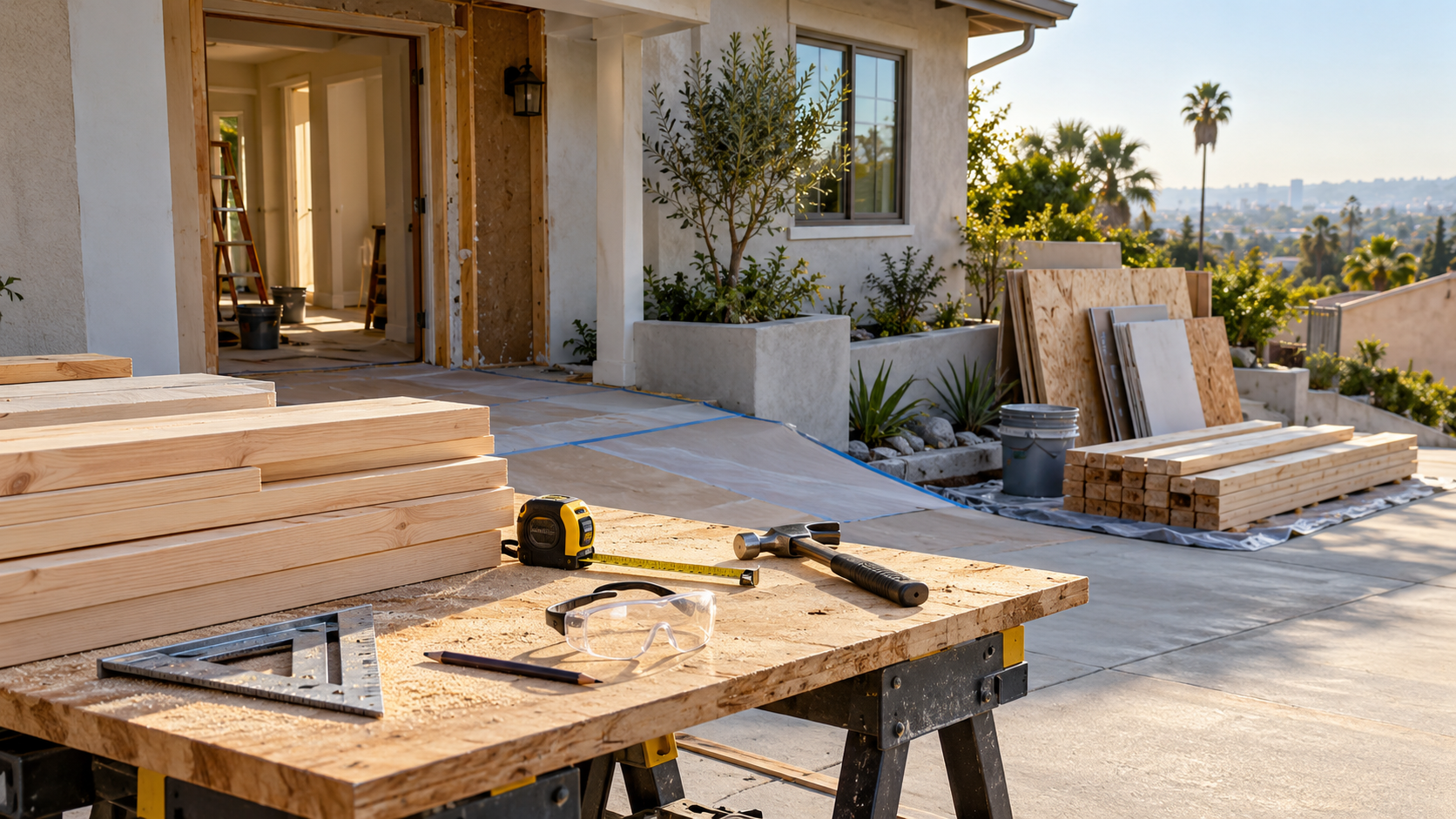
Start with the decisions that shape the job
Whether you are remodeling a home, improving a commercial space, or repairing an aging building, choosing a construction company is only one part of the project. You also need a clear scope, a workable budget, and a plan for how construction will affect the property.
For a Signal Hill project, site conditions deserve early attention. A sloped driveway, limited staging space, shared access, or a building close to neighboring properties can influence how a crew works. Identify those constraints before asking companies for final proposals.
This guide walks through the process so you can have more useful conversations with contractors and make decisions with fewer surprises.
1. Turn your goal into a written scope
Start by describing the problem you want to solve. “Update the kitchen” leaves room for very different interpretations. “Replace cabinets and counters while keeping the sink and appliances in their current locations” gives a contractor a clearer starting point.
Separate the project into three groups:
- Essential work: Repairs or improvements required to achieve your main goal.
- Optional upgrades: Features you would consider if the budget allows.
- Excluded work: Areas or systems you expect to leave untouched.
Describe finishes, fixtures, storage needs, and accessibility preferences where they matter. Include photographs and measurements when available, but allow the contractor or design professional to verify dimensions.
For commercial improvements, explain how the space will be used. Changes in occupancy, equipment, customer access, or room layout may raise questions that need to be resolved before pricing is reliable.
2. Identify site constraints before comparing bids
Ask prospective contractors to visit the property. Photographs are useful, but they may not reveal an awkward delivery route, overhead obstruction, drainage concern, or narrow passage beside the building.
Walk through practical questions together:
- Where can workers unload materials and store equipment?
- Can vehicles reach the work area safely?
- Will occupants or neighboring properties need continued access?
- Where could a debris container go?
- What surfaces, landscaping, or shared areas need protection?
If the property has a slope, retaining walls, signs of movement, or unexplained water intrusion, ask whether further assessment is needed before the scope is finalized. Avoid assuming a visible symptom has a simple cause.
Existing plans and records may help, but they should not replace checking actual conditions.
3. Confirm the approval path with the city
Before agreeing to a start date, contact the City of Signal Hill through its official website to find the current building and planning contacts. Describe the proposed work and ask which reviews, permits, documents, and inspections may apply.
Confirm requirements directly for your address and project. Do not assume that a similar job elsewhere followed the same process. Exterior changes, additions, structural work, and changes to building systems can involve different questions.
Ask who will prepare drawings, submit applications, respond to review comments, and schedule inspections. Put those responsibilities in the agreement with your project team.
Where relevant, separately confirm property association requirements, landlord consent, utility coordination, and any rules affecting shared access. City approval does not resolve every private property obligation.
4. Compare construction companies using the same information
Give each company the same scope, drawings, photographs, and material expectations. Otherwise, a lower proposal may simply include less work.
You can browse construction company listings in the LA Services directory to identify businesses to contact. Use those listings as a starting point for your own research and conversations.
Ask each candidate about experience with projects of similar size and complexity. A company that regularly handles occupied remodels may approach access and dust control differently from one focused on vacant construction sites.
Request references for comparable work. Useful questions include how the contractor communicated, handled unexpected conditions, and completed remaining items. Confirm current contractor license information through the California Contractors State License Board, and request relevant insurance documentation for your review.
5. Read proposals for gaps, allowances, and assumptions
A useful proposal explains what is included, what is excluded, and what remains uncertain.
Look closely at demolition, debris removal, surface preparation, protection of existing finishes, and restoration around new work. These tasks can be easy to overlook when attention is focused on cabinets, flooring, or fixtures.
An allowance is a placeholder for an item whose final selection or cost has not been established. Ask what each allowance covers and how differences will be calculated. A fixture allowance, for example, may leave installation or related parts elsewhere in the proposal.
Request clarification when a proposal relies on broad phrases such as “as needed” or “standard finish.” Record the agreed meaning before signing.
Keep room in your budget for unresolved conditions. Ask the contractor to identify likely uncertainties and explain what investigation could reduce them.
6. Put responsibilities and changes in writing
Before work begins, review the written agreement carefully. It should make the scope, payment arrangements, responsibilities, and process for changes understandable. For current California contracting requirements, consult the Contractors State License Board; seek qualified advice if you need help interpreting terms.
Discuss how progress will be documented and what supports each payment request. Clarify who purchases materials, handles deliveries, and addresses damaged or incorrect products.
Establish a written change process. A change should describe the revised work, its price, and any schedule effect before you authorize it, whenever circumstances allow.
Also identify your main contact. Knowing who can answer questions and approve decisions helps prevent conflicting instructions to different crew members.
7. Build a schedule around decisions and dependencies
A construction schedule involves more than the number of days workers are on site. Design decisions, approvals, product availability, inspections, and subcontractor coordination can all affect progress.
Ask for a sequence showing major milestones and the decisions you must make before each one. Confirm which materials need early selection and who tracks their delivery dates.
If you will remain in the property, discuss temporary arrangements for bathrooms, cooking, parking, pets, and secure access. For a business, explain which operations must continue and when interruptions would be especially disruptive.
Ask how delays will be communicated and when an updated schedule will be provided.
8. Agree on daily site practices
Set expectations for work hours, cleanup, dust containment, material storage, and securing the property. Confirm applicable work-hour and street-use rules with the city rather than relying on assumptions.
Discuss how crews will protect floors, doorways, landscaping, and neighboring areas. Identify who handles complaints or accidental damage.
A short, regular progress meeting can keep communication manageable. Review completed work, upcoming activities, pending decisions, and proposed changes. Keep a shared written record of important agreements.
If you notice a concern, raise it promptly with the designated contact. Describe the location and issue clearly, using photographs when helpful.
9. Plan the handoff before the last day
Schedule a walkthrough while there is still time to resolve remaining items. Test doors, windows, fixtures, and installed equipment with the contractor where appropriate. Check visible finishes and compare completed work with the agreed scope.
Create a written punch list identifying each outstanding item, the responsible party, and the expected completion date.
Request applicable inspection records, product manuals, warranty information, care instructions, and documents identified in your agreement. Confirm the status of required approvals with the appropriate authority.
A well-managed project ends with a usable space and a clear handoff. Defining those expectations early gives both you and the construction company a practical target throughout the job.