Start with the symptoms, not a guess
An air conditioner that runs without cooling can be frustrating during a hot Palmdale afternoon. The indoor fan may sound normal while rooms stay warm, or the system may cool early in the day and struggle later.
Several problems can produce similar symptoms. A dirty filter, incorrect thermostat setting, frozen coil, electrical fault, or refrigerant issue can all affect cooling. Replacing parts based on a guess can leave the actual cause unresolved.
Start with a few checks that do not require opening equipment or touching electrical components. Your goal is to gather useful information and rule out simple problems before arranging service.
Check the thermostat first
Confirm that the thermostat is set to Cool and that the target temperature is below the room temperature. Check the schedule, too. A programmed setback, vacation mode, or recent power interruption may have changed how the system operates.
For troubleshooting, set the fan to Auto. With the fan set to On, air can continue moving through the vents even when the equipment is not actively cooling. That can make a system seem to be running continuously when only the blower is operating.
If the thermostat has a blank display or a low-battery notice, follow its battery replacement instructions. After changing settings, allow for any startup delay described in the equipment manual. Repeatedly switching the system on and off will not make it cool faster.
Look at the air filter and airflow
A clogged filter can restrict airflow and contribute to poor cooling or coil icing. Find the filter location specified for your system, which may be at a return grille or near the indoor equipment.
Turn the system off before removing the filter. If a disposable filter is heavily loaded with dust, replace it with the correct size and a type suitable for the equipment. Follow the airflow arrow and manufacturer instructions. Do not assume that a more restrictive filter is automatically a better choice.
Next, walk through the house and check that:
- Supply registers are open and clear of rugs or furniture.
- Return grilles are not blocked by storage or curtains.
- Airflow is noticeably present at the usual outlets.
- No room has suddenly lost airflow compared with its normal condition.
Closing numerous vents to redirect cooling can create airflow problems. If one room stays warm while others cool normally, describe that pattern to the technician rather than assuming the entire system needs replacement.
Inspect the outdoor area without opening the unit
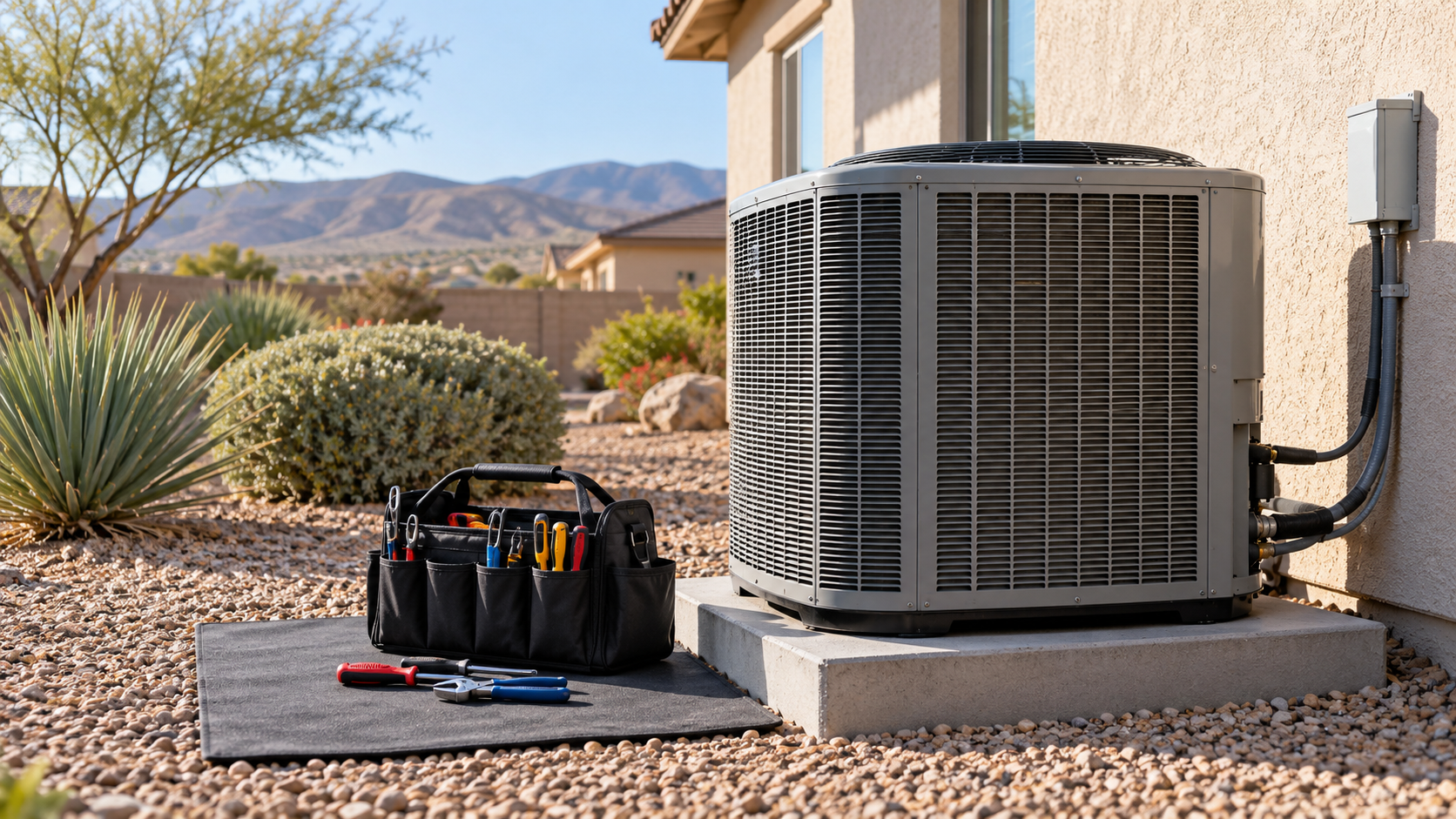
From a safe distance, observe the outdoor condenser while the thermostat is calling for cooling. Note whether the fan appears to run and whether there are unusual sounds. A stationary fan is useful information, but it does not identify the failed component by itself.
Palmdale's dusty conditions make outdoor equipment worth checking after windy weather. Loose leaves, windblown litter, and stored items can interfere with airflow around the cabinet.
With the system turned off, remove loose debris from the surrounding ground without reaching through the grille. Follow the equipment manual for required clearance. Leave coil cleaning to a professional if access is difficult or the method is unclear.
Do not remove service panels, touch wiring, push the fan blades, or spray electrical areas. Avoid pressure washers, which can damage delicate coil fins.
Watch for ice, water, and unusual smells
Visible frost on accessible refrigerant tubing or ice near the indoor coil is a reason to stop cooling operation. Ice can develop from restricted airflow or other faults, including refrigerant problems. It does not prove the system simply needs more refrigerant.
Turn cooling off and contact a technician for next steps. Do not chip away ice or apply heat. Thawing can release water, so watch for leakage near ceilings, walls, or flooring.
Water around indoor equipment may also point to a condensate drainage problem. If water is approaching electrical components, keep clear and seek service promptly. Do not open the equipment to investigate.
A burning smell, smoke, sparking, or repeated breaker trips calls for stopping operation. If there is smoke or an active fire, leave the area and contact emergency services. Do not repeatedly reset a breaker to keep the air conditioner running.
Notice when the cooling problem happens
The timing of the problem can help a technician narrow the investigation. A system that cools in the morning but falls behind in the afternoon may be affected by outdoor heat, solar exposure, airflow limitations, equipment condition, or several factors together.
Keep a simple record of the thermostat setting, displayed indoor temperature, and time of day. Note whether the problem affects the whole house or particular rooms, and whether the outdoor equipment seems to operate during those periods.
Also mention recent changes, such as roofing work, insulation work, a new thermostat, or construction near ductwork. These details can be more useful than a general description that the air conditioner is weak.
Avoid diagnosing performance from how cold a vent feels to your hand. Proper testing requires measurements interpreted in the context of the system and operating conditions.
Know when troubleshooting should stop
Arrange professional diagnosis if the basic checks do not restore cooling, ice returns, airflow remains weak, or the outdoor equipment does not appear to start normally.
Electrical testing, refrigerant measurements, internal cleaning, and component replacement require appropriate tools and training. Capacitors and other electrical components can remain hazardous even after power is disconnected.
When calling, describe what you observed rather than requesting a particular part. “The indoor fan runs, the house stays warm, and the outdoor fan is stationary” gives a technician a clearer starting point than “I need a capacitor.”
Ask about the diagnostic charge, scheduling availability, and how repair approval works before booking. Confirm current pricing and service terms directly with the business.
Prepare for a useful repair visit
Clear access to the thermostat, indoor equipment, filter location, and outdoor unit. Secure pets and explain any access limitations, including attic entries or locked gates.
Have the following information ready if available:
- Equipment model and serial numbers from safely accessible records or labels.
- Approximate installation age and maintenance history.
- Recent filter changes or previous repairs.
- Photos of visible icing or leakage taken without opening equipment.
- Any warranty paperwork.
Ask the technician to explain the findings, proposed repair, and how they will check performance afterward. If refrigerant is involved, ask how they evaluated the reason for the problem. Adding refrigerant alone may leave a leak or another underlying fault unresolved.
Compare repair options with clear information
Request a written description of the proposed work, including parts, labor, exclusions, and warranty terms. If replacement is suggested, ask what findings support that recommendation and whether a repair remains a reasonable option.
For work involving permits or contractor credential requirements, confirm current rules with the applicable local building department and California's contractor licensing authority. Requirements can depend on the property and scope of work.
You can browse the LA Services directory to find air conditioning repair listings serving Palmdale. Compare businesses based on their stated services, availability, and answers to your questions. Direct confirmation helps you choose a provider whose service matches the problem.
A few careful observations can make the repair process more productive. Check settings and accessible airflow paths, stop when warning signs appear, and give the technician a clear account of what changed.