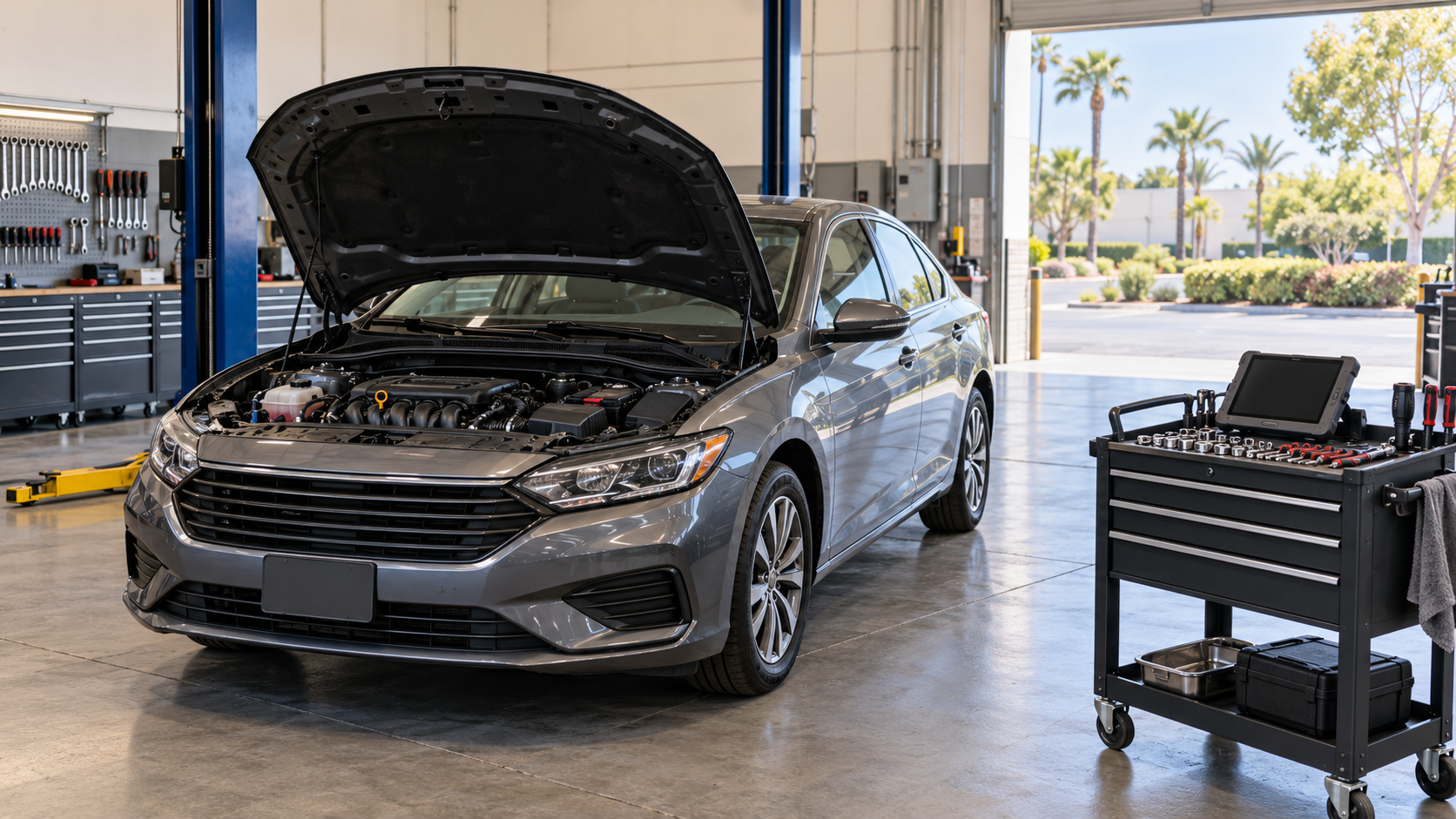
A Practical Guide to Planning an Auto Repair Visit in Cerritos
A dashboard light appears on the way to work. The brakes start squeaking during errands. Your car suddenly needs two tries to start. Whatever brings you to an auto repair shop, a little preparation can make the visit less confusing and help the technician understand what needs attention.
For Cerritos drivers juggling commutes, school pickups, and trips around Los Angeles County, the goal is straightforward: describe the problem clearly, understand the proposed work, and know what to expect before leaving the car.
Here is a practical way to handle the process, from the first unusual symptom to the drive home.
Start With What You Notice
You do not need to diagnose your own vehicle. Your most useful contribution is an accurate description of what happens and when.
Instead of saying, “Something is wrong with the engine,” try: “The engine shakes for about a minute after the first start of the morning, then smooths out.” That gives the shop a condition it can try to reproduce.
Before calling, write down:
- What you hear, feel, smell, or see.
- When the issue first appeared.
- Whether it happens when starting, braking, turning, accelerating, or idling.
- Whether the vehicle is cold or warmed up.
- Any warning lights or dashboard messages.
- Recent repairs, battery work, or other changes.
A photo of a dashboard message or a recording made while safely parked may help. Never use your phone to capture a symptom while driving.
If the problem is intermittent, say so. An issue that happens twice a week may take more investigation than one that appears every time the car starts.
Decide Whether to Drive or Arrange Help
An appointment should not take priority over an immediate safety concern.
Smoke, a strong fuel smell, overheating, a major fluid leak, or a noticeable loss of braking or steering ability calls for stopping in a safe location and arranging assistance. Do not continue driving simply because the shop is nearby.
Warning lights require context. Check your owner's manual for the specific symbol and instructions for your vehicle. If you are unsure whether it is safe to drive, describe the symptoms to the shop or roadside assistance provider before moving the car.
Avoid opening a hot cooling system or reaching near moving engine components. You can give the shop useful information without inspecting the problem yourself.
Find a Shop That Handles Your Type of Work
Start with the service you need, even if that service is simply diagnosis.
A shop that handles routine maintenance may have a different focus from one that specializes in transmission repair, electrical problems, hybrids, or air conditioning. Ask whether the shop works on your vehicle's year, make, model, and powertrain.
You can browse local business listings in the LA Services directory to identify auto repair shops serving Cerritos and nearby communities. Contact each business directly to confirm its services, availability, and current details.
When comparing options, look for clear answers to practical questions:
- Can the shop investigate your particular symptom?
- Who will update you about findings and estimates?
- Does it need the vehicle for several hours or longer?
- Is towing or after-hours drop-off available?
- What written warranty, if any, applies to the proposed repair?
Reviews can offer clues about communication and scheduling, but they cannot establish what your vehicle needs. Pay attention to how the shop answers your own questions.
Understand What the Appointment Includes
A scheduled drop-off time is not always the time a technician begins working. Ask whether you are reserving a diagnostic slot, leaving the vehicle for the day, or waiting for a specific maintenance service.
Explain any conditions needed to reproduce the problem. A cold-start issue may require leaving the car overnight. A vibration that appears only at a certain speed may require a road test.
Discuss diagnostic charges before the appointment. Ask what the initial charge covers, whether further testing could cost more, and whether any diagnostic charge is applied toward an approved repair. Policies vary, so get the answer directly from the shop.
A trouble-code scan and a diagnosis are not necessarily the same service. A stored code can guide testing, but it does not always identify a single failed part.
Make Drop-Off Easy
Bring the information that helps the shop understand the vehicle's history without overwhelming the conversation.
Useful items include your symptom notes, mileage, recent service records, and any relevant warranty or service-contract documents. If the wheels may need to come off, make sure the wheel-lock key is available if your vehicle uses one.
Remove valuables and clear access to areas involved in the repair. An electrical concern may require access to a battery located in the trunk or under a seat.
Confirm the best phone number for updates and explain when you can respond. If your workday makes calls difficult, ask whether the shop can send estimates by text or email.
For Cerritos households sharing vehicles, settle transportation arrangements before drop-off. Ask about pickup hours and what happens if diagnosis continues into the next day.
Read the Estimate Before Approving Work
A useful estimate should make the proposed work understandable. Ask for an explanation of the parts, labor, diagnostic charges, and other listed costs.
If several items appear, separate them by purpose:
- Work intended to resolve your original complaint.
- Additional concerns discovered during inspection.
- Routine maintenance due by mileage, time, or documented condition.
Then ask which items need prompt attention and which can be scheduled later. Request the reason behind each recommendation. Depending on the issue, that might be a measurement, test result, visible leak, or maintenance interval in the vehicle manufacturer's schedule.
You can also ask about parts choices, including whether the estimate uses new, remanufactured, or other replacement parts. Availability, warranty coverage, and suitability may differ.
Agree on how the shop will request approval if the scope changes. Before authorizing work, understand the current estimated total and any remaining uncertainty.
Handle Delays and Unclear Findings
Some repairs take longer because a part is unavailable, testing reveals another issue, or the symptom cannot be reproduced.
Ask what has been learned, what remains uncertain, and what the next step would involve. If the shop cannot reproduce the concern, provide more detail about the conditions instead of guessing at a replacement part.
For a substantial repair, an unclear explanation is a reasonable reason to pause and seek another opinion. Ask for the findings and estimate in writing so you can compare the same scope of work.
If you have questions about California repair paperwork, authorization requirements, or a complaint process, confirm current guidance with the California Bureau of Automotive Repair. For warranty coverage, check your actual documents and contact the warranty administrator before authorizing work you expect it to cover.
Make Pickup Part of the Repair Process
Allow a few minutes to review the invoice before leaving. Confirm what was repaired, what testing was performed, and whether any concerns remain.
Ask whether there are follow-up instructions, a recheck appointment, or operating precautions specific to the repair. Get any warranty terms in writing and keep the invoice with your service records.
On your next drive, pay attention to the original symptom. If it remains or a new concern appears, contact the shop promptly with a clear description. Do not assume every change is expected after repair.
A good repair visit starts with useful observations and continues through clear approval, updates, and pickup. You do not need technical expertise to participate. A few written notes and direct questions can help you understand the work and keep your Cerritos routine moving.