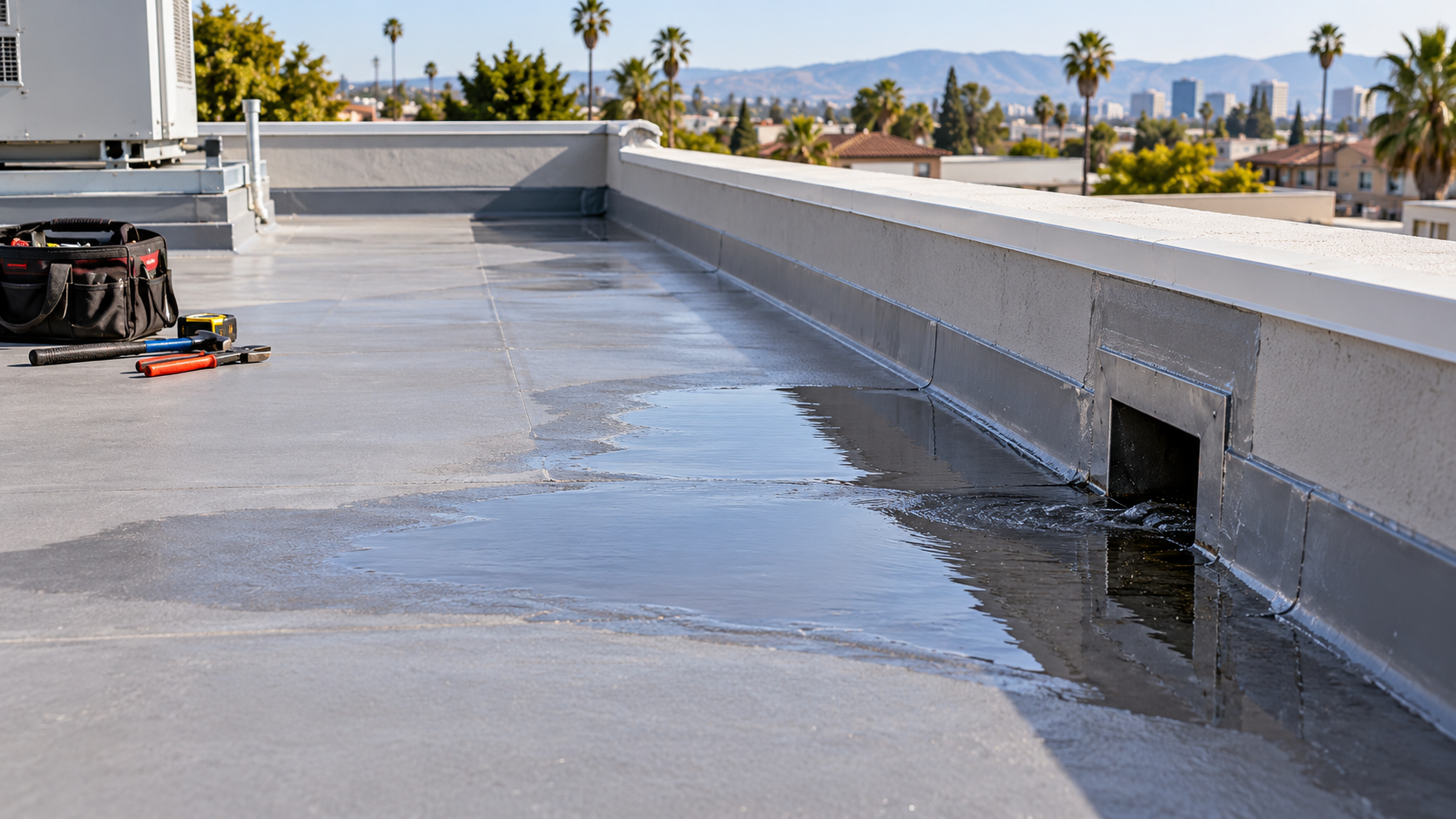
Start with where the water collects
A puddle that keeps returning to the same roof area deserves a closer look. On a low-slope roof, often called a flat roof, standing water can reflect a blocked outlet, a low spot, or a drainage layout that needs attention. The useful question is not simply whether the roof needs another coating. It is why the water stays there and what work would help it drain.
For a South El Monte homeowner or small commercial property owner, the first step is to document the pattern safely. A clear record helps a roofing contractor distinguish a maintenance problem from a problem involving the roof surface, slope, or supporting structure.
This guide focuses on that task: getting a drainage diagnosis and a repair proposal that addresses the cause of recurring ponding.
Document the pattern without climbing onto the roof
Do not walk onto a wet roof or use a ladder to investigate. Roof edges, slippery surfaces, and concealed weak areas make close inspection a job for someone with suitable equipment and training.
Instead, collect what you can observe from the ground, an existing safe window view, or inside the building:
- Where ceiling stains or drips appear, including their distance from nearby walls.
- When the rain stopped and when standing water was last visible.
- Whether an accessible downspout outlet appears to discharge water during rain.
- Whether the problem follows every storm or only certain conditions.
- Any recent rooftop work involving air-conditioning equipment, solar panels, or other installations.
Photograph interior stains and date your notes. Save earlier roofing invoices, warranty documents, and photos if available. Do not assume a ceiling stain marks the entry point directly above it; water can travel before becoming visible indoors.
If water is entering near electrical fixtures, avoid the affected area and arrange appropriate professional help. Active leakage also warrants prompt attention while the larger drainage question is investigated.
Ask the roofer to trace the drainage route
A useful inspection follows water from the roof surface to its discharge point. Ask the contractor to explain the intended route and identify where that route breaks down.
Outlets and debris
Leaves, sediment, and other debris can obstruct roof drains, gutters, or scuppers, which are openings through a roof's perimeter wall. A blockage may be obvious, but clearing the visible opening does not establish that the entire route is working.
Ask whether the inspection includes the drain connection, accessible piping, and discharge point. If a concealed drain line needs plumbing work, clarify who will evaluate it and coordinate the repair.
Low areas in the roof surface
Water may collect because part of the roof sits lower than the path to its outlet. The contractor should identify the low area and explain the evidence behind the diagnosis.
Possible contributors include uneven underlying surfaces, compressed insulation, or movement in the roof assembly. A roofer should also recognize when an unusual depression or apparent sag calls for further evaluation rather than a surface patch.
Equipment and previous alterations
Equipment supports, added penetrations, and earlier repairs can interrupt drainage. A raised patch may stop one leak while leaving a small barrier that holds water elsewhere.
Ask the roofer to inspect transitions around equipment, walls, and penetrations. If another trade must move equipment, the proposal should make that responsibility clear.
Separate leak repair from drainage correction
Stopping a leak and correcting ponding are related tasks, but one does not automatically accomplish the other.
A seam repair or flashing repair may address an entry point while leaving the puddle unchanged. Conversely, improving drainage will not necessarily restore damaged seams or deteriorated roofing material. A complete proposal should explain both conditions when both exist.
Ask two direct questions:
- What work addresses the water entering the building?
- What work addresses the water remaining on the roof?
A coating may be appropriate for some roof systems and conditions, but it should not be presented as an automatic way to change slope or eliminate a depression. Ask for the proposed product's requirements concerning standing water, surface preparation, and compatibility with the existing roof.
Avoid selecting a product before the contractor has explained the drainage problem.
Match the repair scope to the cause
The right scope depends on what the inspection finds. These are possibilities to discuss, rather than a menu to choose from without an assessment.
Cleaning and maintenance: If debris is the cause, clearing the drainage route and establishing a maintenance schedule may be the starting point. Ask how the contractor will confirm that water can reach and pass through the outlet.
Localized roof repairs: Damaged seams, flashing, or membrane may need attention near the ponding area. The estimate should identify the repair boundaries and explain whether drainage will change.
Slope correction: Some projects use tapered insulation or other designed changes within the roof assembly to direct water toward outlets. Ask how the proposed elevations connect to surrounding areas and whether the work could redirect water into another low spot.
Drainage changes: Adding or modifying drains or scuppers requires attention to the discharge route, wall details, and the building as a whole. Confirm applicable permit and design requirements with the City of South El Monte before authorizing alterations.
Broader replacement: If deterioration or wet materials extend beyond a small area, a larger scope may be proposed. Ask what observations or testing justify it, and whether targeted investigation would help define the boundaries.
Request an estimate you can compare
“Fix ponding” is too vague to evaluate. Ask each contractor to describe the location, cause, proposed work, and expected result in writing.
A useful estimate identifies:
- The affected roof area and existing roofing material.
- Preparation, removal, and disposal work.
- Materials and installation details for the proposed repair.
- Any changes to slope, drains, scuppers, or flashing.
- How concealed damage will be documented and priced if discovered.
- Responsibility for permits and coordination with other trades.
- Cleanup, completion checks, and warranty terms.
Ask what would remain unresolved after the proposed work. A limited repair can be reasonable when its limits are explicit.
When comparing bids, compare those scopes before comparing totals. A proposal to clean an outlet and patch a seam is a different job from one that removes wet materials and rebuilds a drainage path.
Check credentials and plan the closeout
Use the California Contractors State License Board's hiring resources to check contractor credentials and confirm current hiring guidance. Ask who will perform the work, who will supervise it, and what insurance documentation is available for the project.
You can browse roofing contractor listings in the LA Services directory to identify businesses to contact. Evaluate each contractor's qualifications and proposal independently.
Before work starts, agree on how completion will be documented. Ask for photos of concealed repair stages, finished drainage details, and any conditions that could not be fully addressed. The contractor should explain an appropriate way to assess drainage afterward; do not flood the roof yourself.
Keep the final scope, invoices, product information, and warranty together. After subsequent rain, record what you can safely observe and report recurring puddles or leaks promptly. A clear diagnosis, a specific scope, and a documented follow-up give you a practical way to judge whether the original drainage problem was addressed.