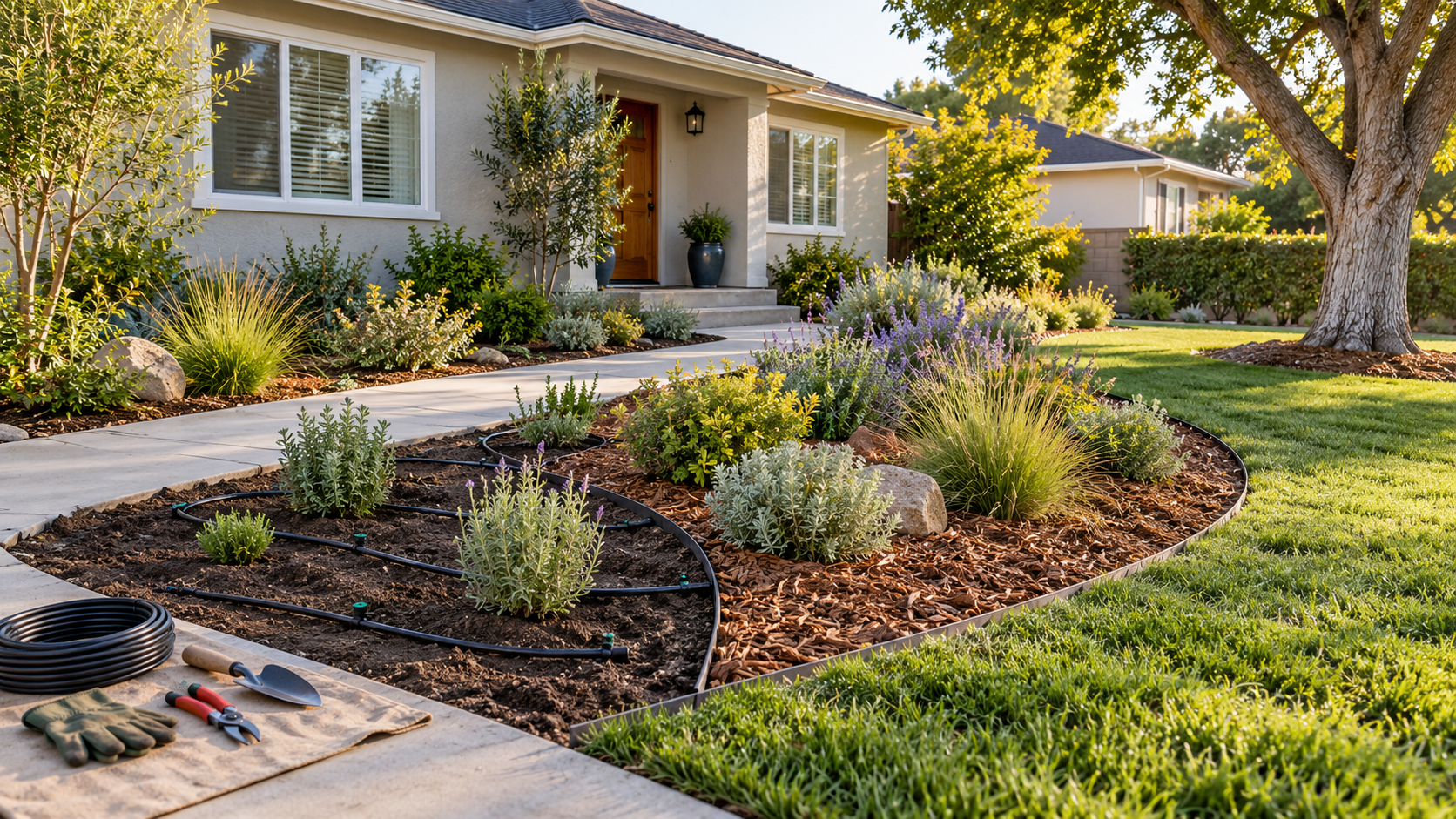
Start with the watering system before choosing plants
Replacing a lawn with a planted garden can reduce mowing and give your yard more seasonal variety. But removing grass and adding drought-tolerant plants does not automatically create an efficient landscape. The irrigation underneath needs to match the new layout.
For a Downey homeowner planning a lawn conversion, the most useful first task is to understand what each irrigation valve currently waters. That information affects where plants belong, which equipment can stay, and what a landscaper should include in the proposal.
A successful conversion connects three decisions: how the space will be used, how water moves through it, and what the plants will need as they mature. Work through those decisions before ordering plants or scheduling demolition.
Map the lawn and its existing irrigation
Draw a simple overhead sketch showing the lawn, house, driveway, walkways, trees, and planting beds. Mark places where people cut across the grass, trash bins travel, or a gate needs clearance. A new garden should accommodate those routes.
If the irrigation system operates normally, run one station at a time and record which sprinklers turn on. Watch for heads that also water a side bed or a neighboring lawn section. A single valve may serve more space than expected.
Note visible problems:
- Spray landing on walls, pavement, or fences.
- Water collecting in low spots or flowing toward the house.
- Broken heads, persistent wet patches, or areas that stay dry.
- Existing trees that receive water from the lawn sprinklers.
Photograph the controller, valve locations, and operating sprinklers. If a station does not work or its route is unclear, ask the landscaper to investigate before finalizing the conversion scope. Guessing can leave part of the yard without an appropriate water supply.
Decide what should replace the grass
Choose the yard's purpose before its plant palette. A front lawn might become a planted garden with a clear route to the door. A backyard may still need an open play area or durable access between the patio and garage.
Identify where planting belongs and where a stable walking surface is more useful. Loose mulch may suit a planting bed but be inconvenient along a frequently used route. Gravel also needs thoughtful edging and placement to keep it from migrating onto sidewalks.
Watch the site at different times of day. Record afternoon sun, building shade, reflected heat near paving, and areas sheltered by trees. These observations help a landscaper place plants according to actual conditions.
Keep mature size in view. A small nursery shrub can eventually block a window or narrow a path. Ask for a plan that shows expected plant widths, rather than judging spacing only by how full the garden looks on installation day.
Group plants by watering needs
Plants sharing an irrigation valve should have compatible watering needs. Mixing thirsty plants with those that prefer drying between waterings can make the entire bed difficult to manage.
Ask the landscaper to explain the proposed watering groups. A sunny border, shaded planting area, and retained lawn may need separate control. Established trees also deserve specific attention because removing lawn changes how water reaches their roots.
Do not assume that a few small drip emitters near a tree trunk will replace its previous water supply. Have the watering approach evaluated for the tree and site. Avoid trenching through substantial roots or piling new soil and mulch against trunks.
The planting plan should also distinguish establishment care from ongoing care. New plants need monitoring while roots grow into surrounding soil. Even a garden designed for lower water use will need adjustments during this period.
Specify an irrigation conversion that fits the layout
Converting sprinklers to drip involves more than attaching tubing to an available riser. The equipment needs to work together at the appropriate pressure and deliver water where the new plants can use it.
Ask the proposal to identify the intended filtration, pressure regulation, tubing, emitters, and flushing access. It should explain which existing components will remain, which will be removed or capped, and whether any valves need repair or replacement.
Existing spray irrigation and new drip equipment generally need different operating arrangements. If a contractor proposes keeping them on one valve, ask how the system will provide suitable pressure and run times for both.
For beds with individual shrubs, the design may use emitters placed around each plant. A densely planted area may suit dripline with regularly spaced outlets. The appropriate choice depends on plant spacing, soil, and layout.
Request a simple irrigation drawing at handoff. Knowing where valves, tubing, and capped lines sit makes future planting and repairs easier.
Remove grass without creating the next problem
Discuss the lawn-removal method before work begins. Physical removal, sheet mulching, and other approaches have different scheduling and follow-up needs. The grass type matters, especially when it spreads through underground or surface runners.
Ask how the contractor will handle regrowth around edges, fences, and retained planting. Covering living grass without an appropriate removal strategy can leave you managing shoots through the new garden.
Removal depth matters too. Taking away soil can expose roots or leave the finished surface too low. Adding material can bury irrigation components or change drainage near the house.
Before approving broad soil amendments, ask what site condition they are intended to address. Soil should be assessed for compaction, drainage, and suitability for the selected plants. There is no single amendment recipe that fits every converted lawn.
Keep drainage separate from irrigation decisions
A lower-water garden still receives rain. Walk the area after rainfall, when possible, and note where water collects and exits.
The conversion should preserve appropriate surface drainage and keep soil and mulch from building up against the house. Ask how new edging, paths, or raised planting areas will affect water movement. A continuous border can accidentally act as a small dam.
If the lawn already has recurring pooling, request a separate explanation of the cause and proposed correction. Replacing grass with gravel or drought-tolerant plants does not resolve a drainage problem by itself.
Keep any proposed changes to drains or discharge routes explicit in the scope. Confirm applicable requirements with the relevant local agency before work proceeds.
Get a proposal you can compare
Give each landscaper the same sketch and priorities. Request separate descriptions for removal, soil preparation, irrigation, planting, mulch, edging, cleanup, and establishment care.
The plant schedule should list plant names, quantities, container sizes, and substitution procedures. The irrigation scope should describe equipment and valve changes clearly enough that you understand what you are buying.
Ask who handles hauling, protects existing trees, and repairs damage to retained irrigation. Clarify whether follow-up visits and controller adjustments are included.
You can browse landscaper listings in the directory to find businesses to contact. Before hiring, use the California CSLB hiring and credential resources to confirm current licensing requirements and check relevant credentials. If you are considering a rebate, confirm eligibility and any preapproval steps with your water provider before removing the lawn.
Finish with a watering demonstration
Before the project is complete, have the installer operate every affected station. Walk the beds together, check connections for leaks, and confirm that each planting area receives water.
Get written instructions for controller settings, filter cleaning, flushing, and seasonal adjustments. Ask when watering should be reassessed as plants establish and how to recognize delivery problems.
Keep the plant list, irrigation sketch, and installation photos together. These records give you a useful starting point when a plant struggles or the garden needs changes. The conversion is ready for everyday care when you understand both what was planted and how it will be watered.