Start by separating the leak location from its source
A ceiling stain beneath a rooftop air conditioner does not establish that the air conditioner caused it. Rainwater can enter through nearby flashing, travel along the roof assembly, and appear indoors several feet away. An equipment problem, such as a blocked condensate drain, can produce a similar stain.
For a Commerce property owner or building manager, the practical task is to identify which system needs attention and obtain a repair scope that addresses the entry point. That may involve a roofing contractor, an HVAC contractor, or coordination between both.
This guide focuses on leaks around rooftop equipment and the openings that serve it, including equipment curbs, pipe penetrations, and conduit supports.
Record when the leak happens
Before scheduling an inspection, collect observations from inside the building. Timing can help contractors narrow the investigation, although it cannot establish the cause by itself.
Record:
- Whether water appears during rain, after rain, or during dry weather.
- Whether the rooftop equipment was operating when the leak appeared.
- How long water continues after the rain or equipment operation stops.
- Whether the stain is new, expanding, or recurring in the same place.
- Any recent equipment replacement, service visit, or roof work.
Photograph the affected ceiling and nearby walls from a safe position. Include a wider view that shows the room layout and a closer view of the damage. Mark the location on a simple floor plan so the contractor can relate the interior symptom to rooftop features.
Move belongings away from active dripping when safe. Keep people clear of sagging ceiling materials and water near electrical equipment. Do not open a wet ceiling or climb onto the roof to investigate.
Understand what surrounds the equipment
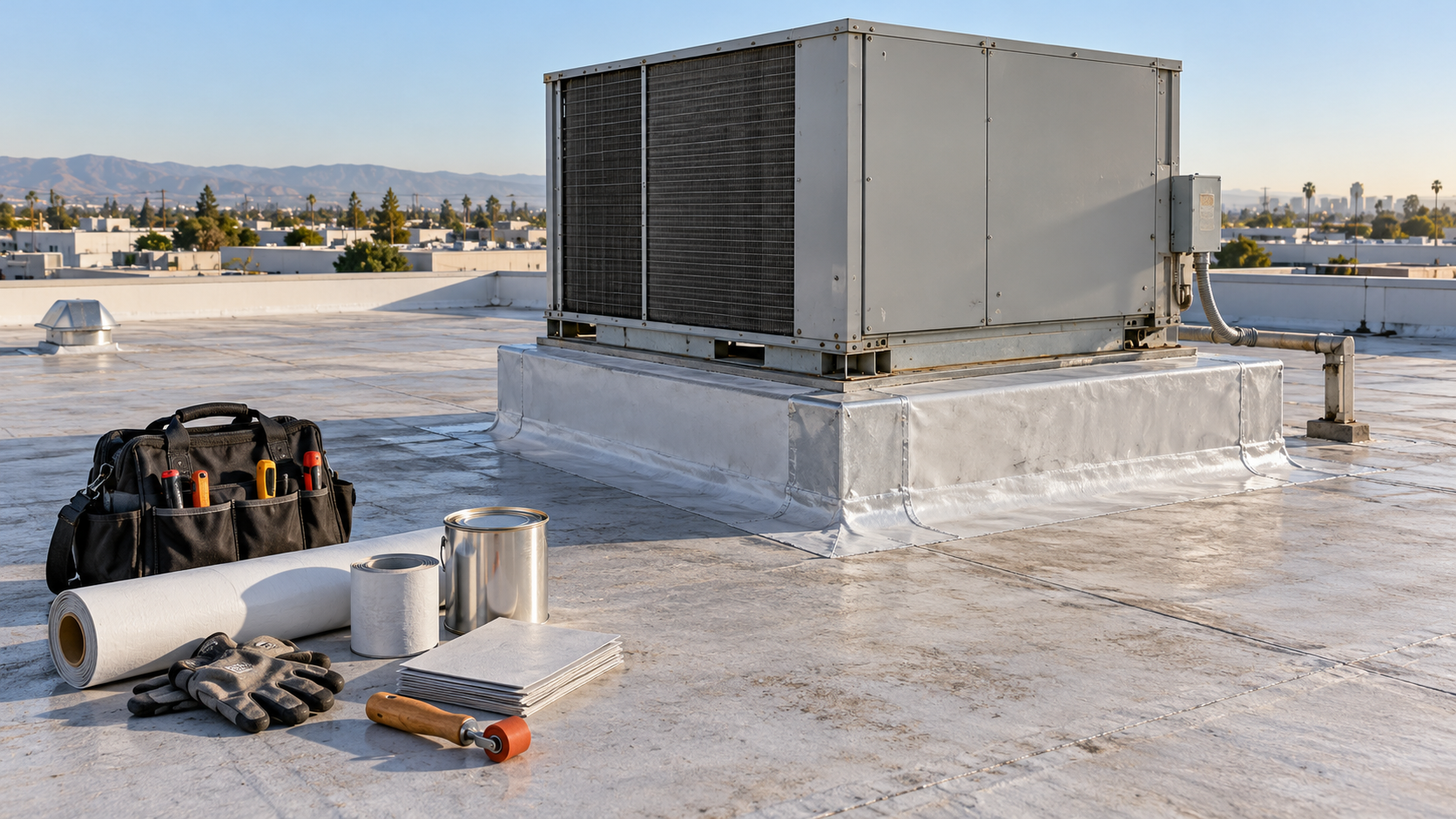
A rooftop unit often sits on a raised support called a curb. The roof covering connects to that curb through flashing, which forms the transition between the horizontal roof and the equipment support.
Other openings may be nearby. Refrigerant lines, electrical conduit, drain piping, exhaust ducts, and support anchors can each create details that need inspection. A leak described as being “at the AC unit” may originate at one of these adjacent penetrations.
Ask the roofing contractor to identify the existing roof system before proposing a repair. Modified bitumen, single-ply membranes, built-up roofing, and other assemblies require compatible materials and appropriate connection details. A product that adheres initially is not necessarily suitable for a lasting repair.
Useful inspection photos should show the overall equipment area as well as individual defects. A close-up of cracked sealant alone may leave unanswered questions about surrounding seams, drainage, and flashing height.
Decide which contractor should investigate first
If leaking occurs only during rain, a roofing contractor is a reasonable starting point. Ask for an inspection of the curb flashing, nearby seams, penetrations, and the surrounding roof area, rather than a proposal to coat the visible crack immediately.
If water appears during dry weather while cooling equipment runs, an HVAC contractor can investigate condensate drainage and equipment-related moisture. Share the timing notes instead of assuming that every drip requires roof work.
When the pattern is unclear, explain that uncertainty to both trades. Ask who will coordinate findings and whether a joint visit would reduce repeat trips. The roofer may need equipment access that only the HVAC contractor should provide, while equipment servicing may reveal a roofing detail that needs repair.
Avoid authorizing work that leaves an essential step unassigned. If a unit must be lifted, disconnected, or reconnected, the proposal should identify who handles those tasks and how the building will remain protected during the work.
Ask for findings before selecting a repair
A useful diagnosis connects an observed defect with a plausible water path. “Old roof” or “needs caulking” is too broad to explain why one ceiling area is wet.
Ask the contractor to describe:
- The suspected entry point and the observations behind that conclusion.
- The condition of the curb flashing and nearby roof seams.
- Whether previous patches are loose, incompatible, or concealing the detail.
- Whether moisture may have affected insulation or the roof deck.
- What remains uncertain without opening part of the assembly.
Some concealed conditions cannot be confirmed during a visual inspection. If exploratory work is proposed, request its location, purpose, temporary protection method, and price basis before it begins.
If controlled water testing would help, ask who will perform it and how the test will isolate individual areas. Unplanned spraying can introduce water at several points and make the findings harder to interpret. Testing should be directed by the contractor, with someone monitoring the interior when appropriate.
Compare scopes by the detail being rebuilt
Two proposals labeled “repair rooftop leak” may describe very different work. One may add surface sealant. Another may remove failed material, replace affected components, and rebuild the flashing connection.
A surface repair can be appropriate in some circumstances, but its purpose and limits should be clear. Ask whether the proposal is temporary protection, maintenance, or a more extensive repair of the existing detail.
The written scope should identify the equipment location, materials to be removed, repair materials, preparation, and connection to the surrounding roof. It should also explain how any discovered wet or deteriorated material will be handled.
For concealed damage, ask for a defined approval process. The contractor should document the condition and explain the additional work before proceeding beyond the agreed scope. Clarify how temporary weather protection will be maintained while you review that change.
Compare exclusions as carefully as included work. Equipment handling, interior ceiling repairs, insulation replacement, disposal, and return visits may be separate items.
Plan access and equipment coordination
On an occupied property, access arrangements can affect both the inspection and the repair. Tell contractors about roof hatches, tenant schedules, delivery areas, and any restrictions on equipment shutdowns.
Identify one person who can authorize access and respond to questions. If tenants are involved, collect their leak observations in advance so the contractor receives a consistent account.
Before work starts, establish who will protect the opening if equipment is moved and who will confirm that the equipment operates afterward. Ask how tools and removed materials will be kept clear of roof drains and walking routes.
If the proposed work changes a curb, relocates equipment, or alters an opening, confirm current permit and inspection requirements with the City of Commerce before approving that portion of the project. Have the contractors identify who will make the inquiry and obtain any required approvals.
Check credentials and define the follow-up
Use the California Contractors State License Board’s hiring resources to confirm current credential-checking guidance and review a contractor’s license information. Match the business named in the proposal with the business you investigate, and ask about insurance relevant to the work.
You can browse roofing contractor listings in the LA Services directory to find businesses to contact. Ask each candidate about experience repairing your roof material and flashing around rooftop equipment.
Before signing, clarify what any repair warranty covers, its exclusions, and whom to contact if water returns. Request completion photos showing prepared surfaces and finished details, especially where the repair will be difficult to view later.
Afterward, keep the proposal, photographs, and service records together. Monitor the interior during the next relevant rain or equipment operating cycle. If leaking returns, record the timing and location again. That information gives the contractor a useful basis for follow-up and helps distinguish a recurring entry point from a separate problem.