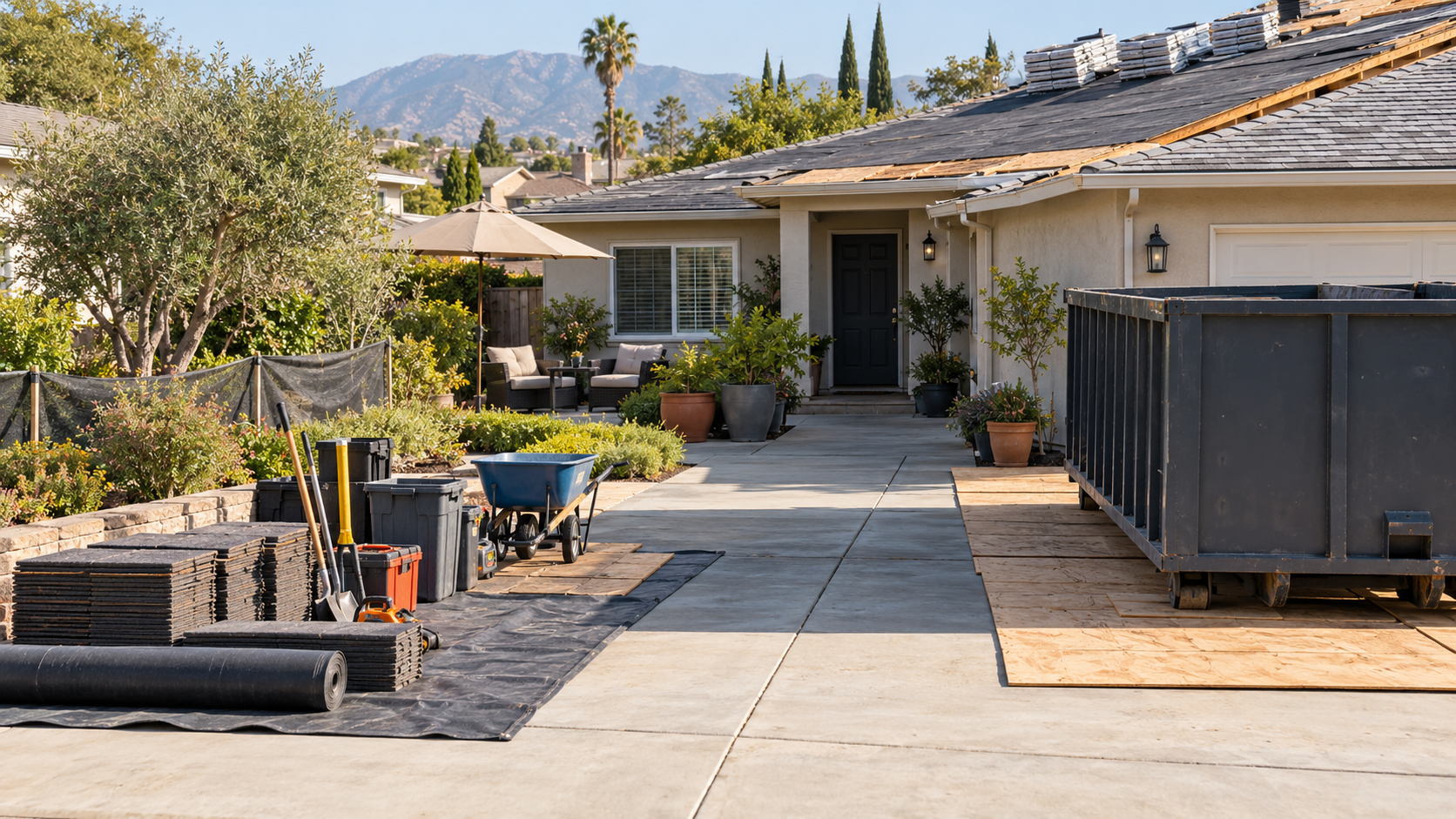
Plan where the old roofing will go
Before a roof replacement begins, ask the contractor to explain how the existing roofing will move from the roof into a disposal container. That route affects where you park, which doors you can use, and how nearby plants, windows and outdoor equipment will be protected.
For a Monterey Park homeowner preparing for roof tear-off, the most useful planning document is a simple property sketch. Mark the driveway, gates, entrances, patio, landscaping and proposed debris container location. Have the contractor identify the work areas and the walking route your household can use throughout the job.
The goal is to settle these arrangements before delivery trucks arrive. A clear site plan also makes competing proposals easier to compare because you can see which protection and cleanup tasks each contractor includes.
Confirm how much roofing will be removed
Ask the roofer to describe the removal scope in writing. Does the proposal cover all existing roof coverings in the project area? What happens to old underlayment, flashing and abandoned roof attachments? Which materials will remain?
The answers influence the amount of debris, the equipment needed and how long parts of the property may be occupied. A proposal that says only “remove existing roof” leaves important details unresolved.
Also ask how the crew will handle damaged decking discovered after removal. The contractor should explain how concealed conditions will be photographed, reported and priced before additional work proceeds. You do not need to predict every hidden problem, but you should understand the approval process.
Keep the removal scope separate from the installation description so you can check that both are complete.
Walk the property with the contractor
Arrange a walkthrough before materials or containers are delivered. Take dated photographs of the driveway, gates, exterior walls, windows, patio surfaces and landscaping near the work area. These provide a shared record of existing conditions.
Pay particular attention to features directly below roof edges:
- Glass doors, skylights and large windows
- Patio covers, pergolas and lightweight awnings
- Air-conditioning equipment and exposed utility lines
- Raised planters, irrigation fixtures and delicate shrubs
- Pools, outdoor kitchens and permanently installed furniture
Ask what protection is appropriate for each feature. A tarp may collect small debris, but it does not provide the same protection as a properly supported barrier against falling material. The roofer should choose and secure protection suited to the work.
Do not cover operating mechanical equipment yourself. Ask the contractor how it will be protected without obstructing airflow or service access.
Agree on container placement and driveway use
A disposal container needs a location that works for delivery, loading and pickup. Ask who arranges it, when it arrives, how long it stays and whether the quoted amount includes disposal and any additional hauling.
Discuss the driveway surface and any known limitations, including decorative paving, cracks or underground features. Ask what surface protection the contractor proposes beneath the container and along equipment routes. Protection can reduce some risks, but it should not be presented as a guarantee against damage.
If placement would occupy a street, sidewalk or other public area, confirm current placement and access requirements with the City of Monterey Park before delivery. Establish who will obtain any required authorization.
Move vehicles before the container blocks access. If you share a driveway, agree on access arrangements with the other users early enough to resolve conflicts.
Protect belongings without creating extra hazards
Move portable items out of the contractor's designated work zone. This commonly includes patio furniture, grills, umbrellas, toys, potted plants and garden tools. Relocating them is usually more dependable than leaving them beneath loosely draped covers.
Inside the home, consider removing fragile wall decorations and securing items that could shift from vibration. Ask the roofer what disturbance is reasonable to expect from the planned removal method and the building's construction.
If the attic contains stored belongings, discuss whether dust or small debris could reach them during the work. Cover or relocate accessible items before work begins, without disturbing insulation or entering unsafe areas. Keep access available if the contractor needs an interior inspection.
Leave roof-mounted equipment, wiring and attachments to the appropriate professionals. The project plan should identify who handles any necessary disconnection, removal and reinstallation.
Establish household access and working boundaries
Choose an entrance that the crew can keep outside the debris-handling zone. Ask the contractor to explain how that route will remain accessible during active removal and how household members should get the crew's attention before passing nearby.
Discuss practical needs such as school departures, deliveries, mobility limitations and access for caregivers. If no entrance can remain usable during a particular operation, arrange that interval in advance.
Children and pets need a secure area away from the work. An open gate that is convenient for hauling can also allow a pet to escape, so decide who controls gates during the day.
Ask about expected working hours and the noisiest activities. Anyone working from home may want to arrange another location for calls during tear-off. Give nearby neighbors a brief scheduling notice when deliveries or shared access may affect them.
Ask how the roof will be secured each day
Before removal starts, ask how much roof the crew expects to open at a time and how it will protect exposed areas if conditions change. The answer should address the actual project, including roof shape, crew size and installation sequence.
Clarify what condition the roof should be in when workers leave each day. Ask who checks temporary protection, what happens if wind or rain interrupts the schedule, and whom you should contact after hours about a concern.
Weather delays can also extend container rental and equipment storage. Find out how those costs are handled under the proposal.
Homeowners should not climb onto the roof to inspect temporary coverings. Request photographs or an explanation from the project contact if you need an update.
Define daily cleanup and final cleanup separately
A tidy-looking driveway does not necessarily mean cleanup is complete. Ask for specific daily tasks: collecting loose debris, securing materials, clearing the agreed entrance and checking areas where household members walk.
For final cleanup, discuss the roof perimeter, gutters where applicable, planting beds, driveway, side passages and neighboring areas potentially affected by the work. Ask whether the crew uses a magnetic sweeper for compatible metal fasteners and how it handles debris in gravel, dense plants or other difficult surfaces.
A magnetic sweep cannot collect every type of roofing debris or guarantee that every fastener is found. Continue wearing shoes outdoors after the project and keep children and pets away from any remaining cleanup area.
Agree on a final walkthrough after the container and temporary protection are removed. That is the best time to identify overlooked debris and compare the property's condition with the initial photographs.
Put the site arrangements into the proposal
The written scope should identify container placement, surface protection, access routes, cleanup responsibilities and the contact who can resolve problems. Include any agreed arrangements for landscaping, shared driveways or equipment that needs specialist handling.
When comparing contractors, look for clear answers about these tasks alongside the roofing materials and installation scope. Use the California CSLB contractor-hiring resources to check credentials and confirm current hiring guidance.
You can browse roofing contractor listings in the LA Services directory to find businesses to contact. Give each contractor the same property sketch and preparation questions so their proposals address the same conditions.
Before the start date, confirm three things with the project contact: where debris will go, how your household will enter and leave, and what cleanup will be completed before the crew departs. Those concrete arrangements make the disruption easier to manage.